Showing posts with label Barley Twist. Show all posts

Wednesday, June 10, 2015

WEDNESDAY'S WORD OF THE WEEK: TORSADE


TORSADE

tor·sade [tawr-sahd, -seyd]

noun [tawr-sahd, -seyd]
   
1.  Furniture. refers to the twisted column that was a chief element in furniture design during the reign of King Louis XIII.

2.   Clothing & Fashion. an ornamental twist or twisted cord, as on hats.

Also called barley twist from barley sugar twist.

Origin:
1880–85; < French: from obsolete tors twisted, from Late Latin torsus, from Latin torquēre to twist.

Torsade or Barley Twist Leg 

In French design, the spiral shape known as a torsade became a major element of the Louis XIII style. The shape dates back to 333 AD when Constantine the Great, the first Christian emperor, brought back a pair of helix shaped columns from Jerusalem to be used in the altar of St. Peter's Basilica in Rome. According to tradition, these columns, known as Solomonic columns, were originally used as structural pillars for the roof of the Temple of Solomon.
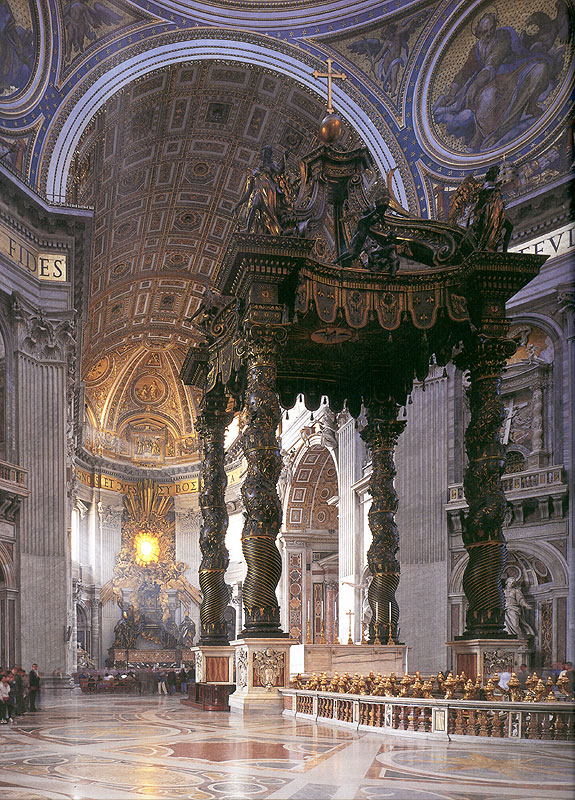
Gianlorenzo Bernini's Baldacchino in St. Peter's Basilica. 

A new basilica was constructed in 1506, and the same spiral columns were preserved and 
used in the new architecture. They still stand, built into the supports of the church across from Gianlorenzo Bernini’s Baldacchino (one of the greatest examples of Solomonic columns), and are viewed by the millions of visitors to the site every day. 

Church Altar Front                                                                         Church Altar Back

The twisted columns gained popularity in the Catholic regions of Europe and became a feature of the Baroque style. They were often used in altars, on the dial case doors of late 17th and early 18th century longcase clocks and the legs of French, Dutch and English furniture. 

Louis XIII Style Barley Twist Desk
Barley Twist Side Table
Louis XIII Barley Twist Hunting Buffet

While English collectors and dealers often refer to the twisted shape as barley sugar twist after the sweet barley sugar twist stick candy that resembled the 17th and early 18th century leg, the French prefer torsade or barley twist.
It's easy to add a French Twist to any decor!

À Bientôt!

Lolo & Mimi

Wednesday, January 29, 2014

WEDNESDAY'S WORD OF THE WEEK: TABOURET


TABOURET

tab·ou·ret [tab-er-it, tab-uh-ret, -rey]

noun [tab-er-it, tab-uh-ret, -rey]

1.   a low seat without back or arms, for one person; stool.

2.   a frame for embroidery.

3.   a small, usually portable stand, cabinet, or chest of drawers, as for holding work supplies.

4.   a small tabor.

Origin:
mid 17th century < French tabouret literally, small drum, from Middle French, diminutive of tabor, tabour drum, from Old French.

The French word tabouret refers to an upholstered footstool or bench.

Louis XIV Tabourets with Tassels and Lavish Carvings. From the Collection of Jacques Doucet, 1912.

The history of stools in Europe can be traced back to the late 1500's. During the reign of King Louis XIV, when chairs were status symbols and no ordinary person could aspire to own one, a hierarchical seating system featured a fauteuil (an armchair) for the king and queen to sit upon. One did not just take a seat when the King or Queen was present. This was dictated by etiquette.

Tabouret and Fauteuil in Louis XIV Style

No one else was allowed an armchair in their presence, except for another monarch visiting the French court. He or she would be offered an armchair as well. A chair with a back but no arms was considered appropriate for those closest in rank to the king, such as his brother, sister or children, and a tabouret was provided only for the more privileged ladies of the court to sit upon in the royal presence. Everyone else was required to stand, no matter their age or fortune.


The court tabouret was an elaborate, upholstered stool with curved wooden legs and tassels, carried by a liveried and wigged servant. It was a much desired honor to sit in the presence of the royal family and a lady’s rank determined how lavishly her tabouret was decorated.  A duchess was automatically granted the honor of sitting in front of the queen.

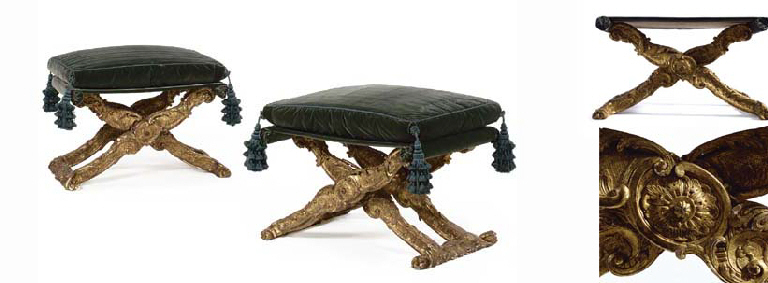
Pair of Louis XV Tabourets. Circa 1735-1740. Realized $216,000 at Christie's Auction.

This little French stool was such a highly treasured stool and symbol of privilege that when Louis XIV's mother, the Regent Anne of Austria granted the tabouret to two non-duchesses, it caused a disturbance like no other. Such a protest was made that she had to revoke them.

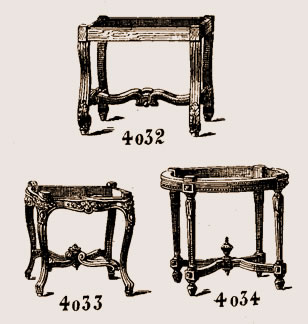
Fig. 4032. Tabouret Loius XIII. Prix, en noyer ciré : 20 francs.
Fig. 4033. Tabouret Louis XIV. Prix, en noyer ciré : 25 francs.
Fig. 4034. Tabouret Louis XVI. Prix, en noyer ciré : 20 francs.
From Le Dictionnaire Pratique de Menuiserie - Ebénisterie - Charpente 
By J. Justin Stoeck, 1900

Tabourets of various designs later became fashionable as household furniture, particularly in France and England.

Louis XVI Needlepoint Tabouret
Louis XIII Style Tabouret
Louis XIII Tabouret
Henri II Tabouret. Circa 1890. Leather Seat with Nailhead Trim.
Country French Tabourets with Rush Seats
Louis XIII Os de Mouton Tabouret
Louis XIII Barley Twist Tabouret
Modern Tabouret with Acrylic Legs and Natural Hide Seat

Remember, next time you "take a seat" on what you thought was just an ordinary stool, you're sitting pretty...like royalty.


But Lolo, he gets the back and the arms...a seat fit for a king!

Á Bientôt!

Lolo & Mimi

Sunday, September 1, 2013

LOLO LANDS IN FRANCE...DAY 1

Lolo has landed! He arrived in Nantes on Saturday just in time to have a simple lunch at home. 

Nantes Atlantique AirportNantes, France

A fresh baguette, pate, local stone crabs and a bottle of Cassis sat on the table laid for four. A "simple, everyday lunch," shared with family and eaten with pleasure. This is how the French eat.

Cracking Stone Crabs
Typical French Lunch
Fresh Baguette,  Pate,  Stone Crabs and a Glass (or Two) of Cassis

After lunch he visited with his mother, sister and brother-in-law before heading out for a quick look at a local dealer's warehouse. This is how an antique dealer thinks!

Louis XV Confitures
Louis XV Grandfather Clock
Louis XV Country French Table
Round Side Table
Antique Writing Table with Barley Twist Legs 
Top Opens to Hold Stationary
Antique French Armchair 
Country French Side Table

He didn't find much on this little outing, but now that we've given you a tiny peek into what it's like to go antique hunting in France, be sure and check back frequently to see if he does stumble upon anything you are interested in or find desirable. If so, "Let Lolo Know"and contact him at info@lolofrenchantiques.com. There will be much more to come over the next week!

À Bientôt!

Lolo & Mimi