Wednesday, August 26, 2015

WEDNESDAY'S WORD OF THE WEEK: ACANTHUS


ACANTHUS

a·can·thus [uh-kan-thuh s]

noun [uh-kan-thuh s]
   
1.  Plants. any shrub or herbaceous plant of the genus Acanthus, native to the Mediterranean region but widely cultivated as ornamental plants, having large spiny leaves and spikes of white or purplish flowers.  

2.  Architecture. a design patterned after the leaves of one of these plants, used especially on the capitals of Corinthian columns.

Origin:
1610–20; New Latin, Latin < Greek ákanthos bear's-foot

The origin of the Corinthian Order, illustrated in Claude Perrault's Vitruvius 1684
Of all the decorative designs inspired by nature, the acanthus leaf is the most iconic. With some resemblance to thistle, poppy and parsley leaves, it is one of the most widely used and popular motifs in architecture, furniture, interior design, and textiles. It can be found on everything from Corinthian capitals to manuscripts.

Acanthus Leaf
Illustrations by Nan Richards for Lolo French Antiques et More

The motif was particularly popular in the court appointments and furnishings of King Louis XVI, however stylized carvings are found in all King Louis styles. The conception and treatment of the margin and shape of the leaf, is the principal characteristic of the different period styles.

À Bientôt!

Lolo & Mimi
Friday, August 21, 2015

LIEN BIEN: Links We Liked This Week


Every Friday we share a few LIEN BIEN (good links) we've recently discovered around the web that we think you may want to read or watch over the weekend. From stories to recipes to our favorite movies and songs, we try to include a little bit of everything. Hope you'll enjoy and please share with us what you're reading or watching in the comments. We'd love to know!


8. Art of the game (via Architectural Digest)

9. Is Instagram killing originality? (via domain)


10. Dapper Designer (via quientessence)

À Bientôt!

Lolo & Mimi

Friday, August 14, 2015

LIEN BIEN: Links We Liked This Week


Every Friday we share a few LIEN BIEN (good links) we've recently discovered around the web that we think you may want to read or watch over the weekend. From stories to recipes to our favorite movies and songs, we try to include a little bit of everything. Hope you'll enjoy and please share with us what you're reading or watching in the comments. We'd love to know!


6. Tea Time (via Houzz)

7. Dog Days of Summer (via moderndog)


À Bientôt!

Lolo & Mimi

Tuesday, August 11, 2015

DOUBLE VISION: Trestle Table


Need some interior design inspiration? See what we've found! Source your favorite finds at 
Lolo French Antiques et More.


Birmingham Home & Garden
Jan Ware, Interior Designer
Jean Allsopp, Photographer
  
Lolo French Antiques et More
Item #LFA266
Antique Spanish Trestle Table with Iron Stretcher
   
À Bientôt!

Lolo & Mimi
                                                                                          

Wednesday, August 5, 2015

WEDNESDAY'S WORD OF THE WEEK: PANIER


PANIER

pan·ier [pan-yer, -ee-er]

noun [pan-yer, -ee-er]
   
1.  a basket, especially a large one, for carrying goods, provisions, etc.

2.  one of a pair of baskets to be slung across the back of a pack animal.

Also called pannier.

Origin:
1250–1300; Middle English panier < Middle French < Latin pānārium breadbasket, equivalent to pān (is) bread + -ārium -ary; see -ier  

Marchand de Paniers, Carle Vernet, 1820

The French have fancied paniers (baskets) for centuries, even before the art of basket making was formally recognized as a trade in France during the 15th century. Baskets have been used to gather flowers, fruits and vegetables from the fields, to present or display breads in village boulangeries, to transport live chickens to be sold to or brought home from the village markets, to harvest grapes for champagne making, and to carry the daily marketing home. 


Antique French Winnowing Basket

By the 13th century, the village of Vallabrègues, alongside the Rhône River near the town of Arles, was the largest basket producer in France. Most of the vanniers (basket makers) living there were wandering artisans that settled on the riverbank because the soil was perfect for growing willow used to make baskets. At one point, when baskets were the main source used for the gathering, storing, drying and transporting of fruits, vegetables, breads and produce, 450 out of a population of 1,818 were vanniers. Basket makers from all over France gather every August in Vallabrègues to celebrate La Fête de la Vannerie (Festival of the Basketry).


Guy Barbier, Vannier at Fête de la Vannerie à Vallabrègues
Source
Fête de la Vannerie à Vallabrègues
Source

With the emergence of wooden crates and the introduction of cardboard and plastic in the 1950s, however, the basketmaking industry virtually disappeared in France. Today, there are only about 200 vanniers left in France, making antique baskets even more collectible.    

Antique French Gathering Baskets

French baskets come in all sorts of shapes and sizes. Originally rustic and created out of necessity, paniers are now functional as well as decorative. They're perfect for storing toys, magazines, blankets, laundry and so much more. Gathering baskets can easily hold firewood or fresh laundry. A French oyster basket looks great filled with towels in a powder room or toys in a playroom. Open sided baguette baskets make wonderful umbrella stands, and French banettons look beautiful when displayed in the kitchen as a centerpiece for dried flowers, fruits or vegetables. Simply line one with an antique French towel and use it to serve a warm baguette.

Antique French Bannetons

Whether large or small, simple or fancy, French baskets always add a touch of warmth and Country French flair to any decor. How do you use or display your favorite panier? Let us know!

À Bientôt!

Lolo & Mimi

Monday, July 13, 2015

BASTILLE DAY: LE QUATORZE JUILLET


Bastille Day, or La Fête Nationale as they say in France, is celebrated to commemorate the importance of the storming of the Bastille, an ancient royal fortress in Paris.


On the morning of July 14, 1789, the people of Paris confiscated weapons from Les Invalides and then marched towards the medieval prison. After a bloody encounter, the crowd broke into the Bastille and released the seven prisoners held there. This event symbolizes the end of absolute monarchy and the beginning of the French Republic.

La prise de la Bastille by Jean-Pierre-Louis-Laurent Houel

The Fête de la Fédération (Feast of the Federation) was held the following year on July 14, 1790, to celebrate the first anniversary of the insurrection. 

Cadets of the École Militaire Interarmes marching down the Champs-Élysées.
© Marie-Lan Nguyen / Wikimedia Commonsons

Today, the national holiday is celebrated in France by everyone. The festivities include food, music, dancing, fireworks and the grand military parade down the Champs Elysees with French jets flying overhead. The parade is the oldest and largest military parade in the world and is led by the President of France. It starts at the Arc de Triomphe and ends at the Place de la Concorde.

The Patrouille de France's Alpha Jets
© Marie-Lan Nguyen / Wikimedia Commons

Families and friends then gather together for a lavish midday feast and conclude the celebrations with fireworks and dancing. Villages across France host their own parades and street parties with plenty of champagne and fireworks.

Fireworks in Paris
Source
Joyeux Quatorze Juillet!

Lolo & MImi

Friday, July 10, 2015

BOATLOAD OF BEAUTIFUL: NEWEST SHIPMENT FRESH OFF THE BOAT

Summer has definitely arrived, and with it a boatload of beautiful French antiques! Our newest shipment is fresh off the boat from France and we've unboxed, sorted and tagged almost 200 pieces. 


If you haven't had a chance to stop by yet, now's the perfect time. Our 10,000 square foot shop is filled to the brim with beautiful French antiques.

Late 18th Century Louis XIV Style Washed Oak Armoire


Antique Country French Pine Cheese Table

If you're busy having a little fun in the sun, please take a look on our website. We're adding new pieces weekly. And be sure to sign up for our newsletter so you're the first to know when new shipments arrive!

À Bientôt!

Lolo & Mimi

Wednesday, June 10, 2015

WEDNESDAY'S WORD OF THE WEEK: TORSADE


TORSADE

tor·sade [tawr-sahd, -seyd]

noun [tawr-sahd, -seyd]
   
1.  Furniture. refers to the twisted column that was a chief element in furniture design during the reign of King Louis XIII.

2.   Clothing & Fashion. an ornamental twist or twisted cord, as on hats.

Also called barley twist from barley sugar twist.

Origin:
1880–85; < French: from obsolete tors twisted, from Late Latin torsus, from Latin torquēre to twist.

Torsade or Barley Twist Leg 

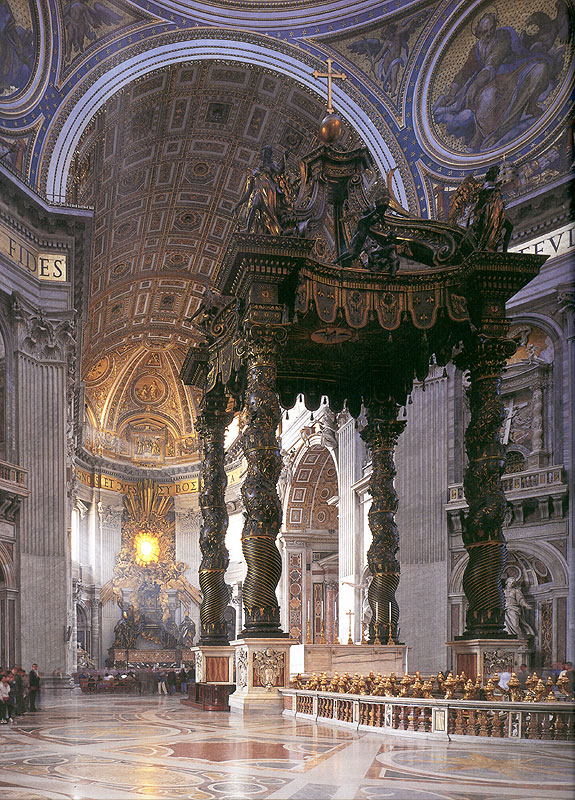
In French design, the spiral shape known as a torsade became a major element of the Louis XIII style. The shape dates back to 333 AD when Constantine the Great, the first Christian emperor, brought back a pair of helix shaped columns from Jerusalem to be used in the altar of St. Peter's Basilica in Rome. According to tradition, these columns, known as Solomonic columns, were originally used as structural pillars for the roof of the Temple of Solomon.

Gianlorenzo Bernini's Baldacchino in St. Peter's Basilica. 

A new basilica was constructed in 1506, and the same spiral columns were preserved and 
used in the new architecture. They still stand, built into the supports of the church across from Gianlorenzo Bernini’s Baldacchino (one of the greatest examples of Solomonic columns), and are viewed by the millions of visitors to the site every day. 

Church Altar Front                                                                         Church Altar Back

The twisted columns gained popularity in the Catholic regions of Europe and became a feature of the Baroque style. They were often used in altars, on the dial case doors of late 17th and early 18th century longcase clocks and the legs of French, Dutch and English furniture. 

Louis XIII Style Barley Twist Desk
Barley Twist Side Table
Louis XIII Barley Twist Hunting Buffet

While English collectors and dealers often refer to the twisted shape as barley sugar twist after the sweet barley sugar twist stick candy that resembled the 17th and early 18th century leg, the French prefer torsade or barley twist.
It's easy to add a French Twist to any decor!

À Bientôt!

Lolo & Mimi

Friday, May 15, 2015

C'EST UNE HISTOIRE FAMILLE (IT'S A FAMILY AFFAIR)

Lolo and I are excited to introduce you to Cole Brock, my son and our newest employee. Cole graduates this summer from The University of Alabama with a bachelor of arts degree in history. His plans were to attend law school until I asked him to help at the store one Saturday while Laurent was out of town. Little did I know what an effect that would have on him. He couldn't wait for Laurent to get back so he could talk to him.

Cole on his official first day at work

Cole's always loved history and has collected "things" for as long as I can remember. Our home was filled with art and antiques, so scouring the stalls of flea markets from New York to Paris as a child was exciting and fun for him. He enjoyed the thrill of the hunt during these adventures and developed an appreciation for antiques and their history. 

Cole getting his portrait done in Montmartre before heading to Les Puces

But it's Laurent's work ethic, passion and love of antiques that has inspired and motivated Cole to want to learn not only the business but the fine art of furniture restoration that Lolo has mastered. He wants to experience the same satisfaction and joie de vivre Lolo experiences doing what he loves. 

Lolo, Mimi and Cole

Only history will tell if he stays on the same career path that Lolo chose over twenty years ago! In the meantime, he'll be happy to assist you with any inquiries you may have. He has a lot to learn, but Lolo says he can already tell "Cole feels it." And Lolo knows!

À Bientôt!

Lolo & Mimi